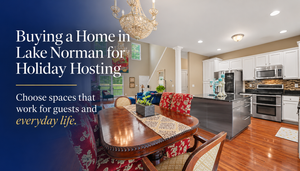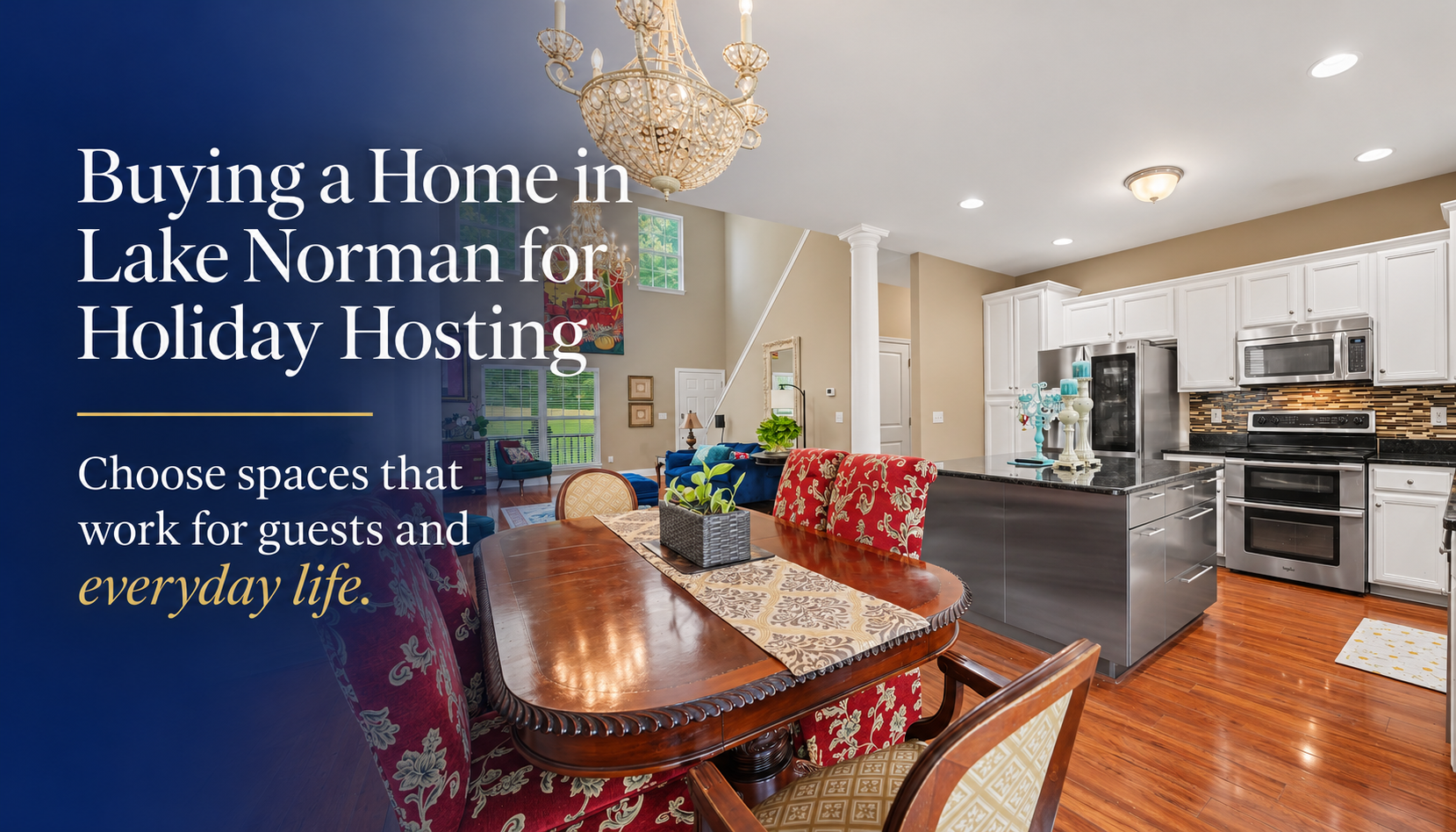
Thanksgiving has a way of showing how a home works when everyone is together. The kitchen fills up, extra coats need a place to go, someone is looking for a quiet corner, and the dining table suddenly seems smaller than it did on an ordinary Tuesday. If you are buying around Lake Norman and hope to host family during the holidays, what should you look for? Start with the way the home supports both a gathering and your regular routine: useful gathering spaces, comfortable overnight options, flexible rooms, and a location and price that still make sense the rest of the year.
That last part matters. A home should fit the life you live most days, with enough flexibility to make special occasions easier. Holiday hosting can be a helpful way to test a floor plan, but it should not become the only reason to stretch your budget or take on rooms you will rarely use.
Start with the way your family actually gathers
The best hosting layout is the one that fits your people and their habits. Think about how many guests typically come, whether they stay for a meal or overnight, and what parts of the day tend to feel crowded. Some families spend most of their time around the kitchen island; others set a formal table, serve buffet-style, or rotate between a living room and a patio. A 2025 Realtor.com survey found that Thanksgiving hosting played at least some role in the most recent home search for 52% of U.S. adults surveyed, while respondents named a large kitchen and a large family room as leading features that would make them more willing to host.
Before you tour, picture a real holiday in the home rather than an idealized one. Where will food be prepared? Can guests sit down without blocking the route to the kitchen? Is there a place for kids to play or for someone to take a break from the noise? These questions turn “great for entertaining” from a listing phrase into a layout you can evaluate.
A floor plan that works for your family will feel useful on a regular week, too.
Look for a kitchen that works with the rest of the home
A kitchen does not have to be enormous to serve a group well. What helps is a layout that gives the cook enough counter space, keeps the main work area clear, and allows people to be nearby without crowding the person preparing food. During a tour, notice whether the kitchen opens toward the dining or living area, whether there is room for more than one person to move around, and where guests are likely to gather. Consider the everyday version as carefully as the holiday version: where do groceries come in, where do backpacks land, and can more than one person use the space comfortably? A kitchen connected to gathering areas can make conversation easier, while a more defined room may suit buyers who prefer separation between cooking and relaxing. Look at the actual traffic flow rather than relying on labels such as “open concept.”
You may also want to consider how serving and cleanup would work. Is there a convenient place to set out food? Can people move from the kitchen to the table without squeezing past the cook? Is the dishwasher close to the sink and cabinet storage? These are small details, but they shape how the room feels when several people are using it at once. If you usually cook with someone else, imagine sharing the prep area. If guests tend to bring dishes, think about where those can land without taking over the counters needed for meal preparation.
Notice the path between rooms. It often tells you more than the square footage alone.
Think about overnight guests without buying a room you will not use
Extra bedrooms can make holiday visits more comfortable, but a guest room does not have to sit empty most of the year. A spare room can serve as a home office, hobby space, reading room, or playroom, then switch to guest use when family visits. Zillow’s 2026 Consumer Housing Trends Report says 62% of surveyed buyers considered a spare or guest bedroom very or extremely important. The same report shows that buyers also weigh fit and daily usefulness: 72% placed high importance on a floor plan that fit their preferences, and 82% said staying within their initial budget was very or extremely important.
A separate Zillow survey published in November 2026 found that some Americans have considered buying a home with more bedrooms or converting unused space into a guest room to make holiday visits easier. Those findings can help frame your search, but the right choice depends on your household. If guests stay only once or twice a year, a flexible room may be more useful than a dedicated guest suite. If relatives visit often or stay for several nights, a private bedroom and nearby bathroom may be worth prioritizing.
Pay attention to privacy and comfort, too. Is the guest room close to a bathroom? Would overnight visitors need to pass through a family member’s bedroom? Is there a closet or another place to store luggage? A room can be compact and still work well if it has a comfortable sleeping arrangement and a little breathing room. For some households, a room on the main floor makes visits easier; for others, an upstairs room creates a quieter separation. Consider the needs of the people who actually come to stay, including mobility, sleep schedules, and how long they usually visit.
The useful question is not simply “How many bedrooms?” It is “How will this room earn its place in our everyday life?”
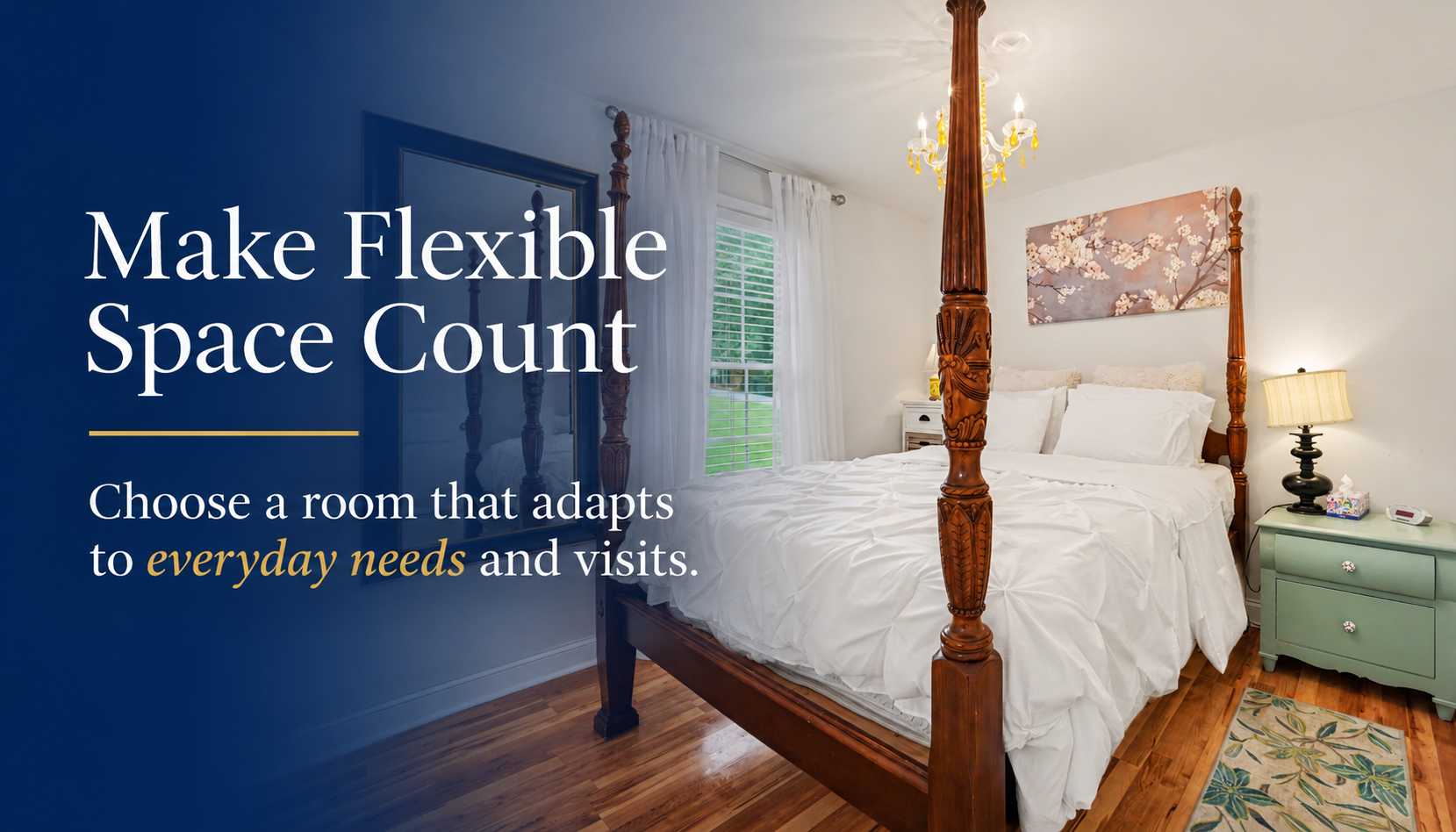
Give flexible space a job for ordinary days
A flexible room can make a home more adaptable without adding a formal guest suite. It might function as an office during the week, a homework area in the afternoon, and a quiet bedroom when relatives stay. Zillow’s 2027 Home Trends Report found that mentions of flex spaces in for-sale listings rose 35% year over year, while mentions of home offices rose 42% and media rooms 37%. These are changes in listing descriptions, not direct measurements of buyer demand, so treat them as a sign of how sellers are describing useful spaces—not a guarantee that a flex room will suit every household.
When you walk through a home, ask what it would take to make an extra room work for your needs. Check its size, natural light, outlets, storage, and whether it has a door for privacy. Think about whether a sofa bed, daybed, or other sleeping arrangement could fit without making the room difficult to use the rest of the time. If the room is currently labeled as a dining room, office, or bonus room, picture how it might function for you rather than assuming its present setup is the only option. Also look at what might be difficult to change: a room without a closet may not suit every use, and a space that doubles as a main walkway may be less private than it first appears.
Make a short list of its likely uses, in order. If the room works as an office or playroom all year and accommodates a guest occasionally, that can be a stronger fit than a room used only for a few holiday nights. A flexible room is most valuable when the flexibility is practical, not just theoretical.
A little flexibility can go a long way when it serves a purpose on an ordinary Wednesday, too.
Check bathrooms, storage, and the spaces guests pass through
Hosting comfort depends on more than the room where everyone gathers. A second bathroom can make mornings easier when several people are getting ready, and a nearby powder room lets visitors avoid walking through private areas of the home. Entry storage can keep coats and shoes from spreading across the living room. A pantry or well-placed cabinets can help keep serving dishes and extra supplies accessible without taking over everyday counters. When touring, notice whether guests can move naturally from the entrance to the main gathering space, bathroom, and outdoor area. Also consider whether the household has enough storage for its own daily needs before assigning shelves or closets to visitors.
Use this quick tour checklist:
Can the kitchen and dining area handle the way your household serves meals?
Is there a comfortable place for guests to sit that does not block daily movement?
Could a spare room serve another purpose when nobody is visiting?
Is a bathroom easy for guests to reach?
Is there a practical spot for coats, bags, and overnight items?
Would the home still feel comfortable if your guest count changed?
A small entryway can be manageable; a layout that sends everyone through the same bottleneck may be harder to work around. Imagine a busy morning, not just a quiet showing.
Include outdoor space and location in the same decision
A patio, deck, porch, or yard can give guests another place to gather when the weather cooperates. Zillow’s 2026 buyer report found that 70% of buyers considered private outdoor space very or extremely important. That does not mean every Lake Norman buyer needs a large yard, and it does not tell us how any particular property will perform. It does suggest that buyers often value outdoor space as part of how a home functions.
As you consider homes around Lake Norman, weigh the outdoor features with the responsibilities and location that come with them. A deck or yard can be useful for a casual gathering, but you will want to understand its condition and upkeep. If a property is waterfront, evaluate the shoreline, dock, water access, and any applicable restrictions as part of the purchase—not simply as extra space for guests. Lake Norman homes vary by town, property type, and proximity to the water, so compare the specific location and daily routes that matter to you. A home that makes a holiday gathering easy may be less appealing if the commute, school route, or maintenance demands do not fit your routine.
Think about where guests will park, how they will reach the home, and whether the location suits your normal errands. Location is part of hosting, but it is part of every other day as well.
Keep the budget and daily routine in view
It is easy to focus on the one weekend when everyone comes over. Before you make a decision, compare the home’s total costs and the value of each feature across the entire year. Zillow’s buyer research found that 82% of buyers rated staying within their initial budget as very or extremely important, a useful reminder that a hosting-friendly feature still needs to fit the financial plan.
Ask yourself whether the additional bedroom, larger kitchen, or bigger yard would solve a recurring need—or only an occasional one. Consider ongoing costs such as utilities, insurance, taxes, maintenance, and any association fees alongside the purchase price. If two homes both seem promising, compare what each one would make easier in a normal week: working from home, getting everyone out the door, keeping up with chores, or enjoying time together. A practical home search leaves room for the celebrations without asking the budget to carry more than it can.
For a current search around the lake, you can browse Lake Norman homes and compare layout, location, and features against your priorities. If you want help thinking through how different communities or home types fit your plans, the team’s contact page provides a way to continue your research. The goal is to make the choice with the full year in mind.
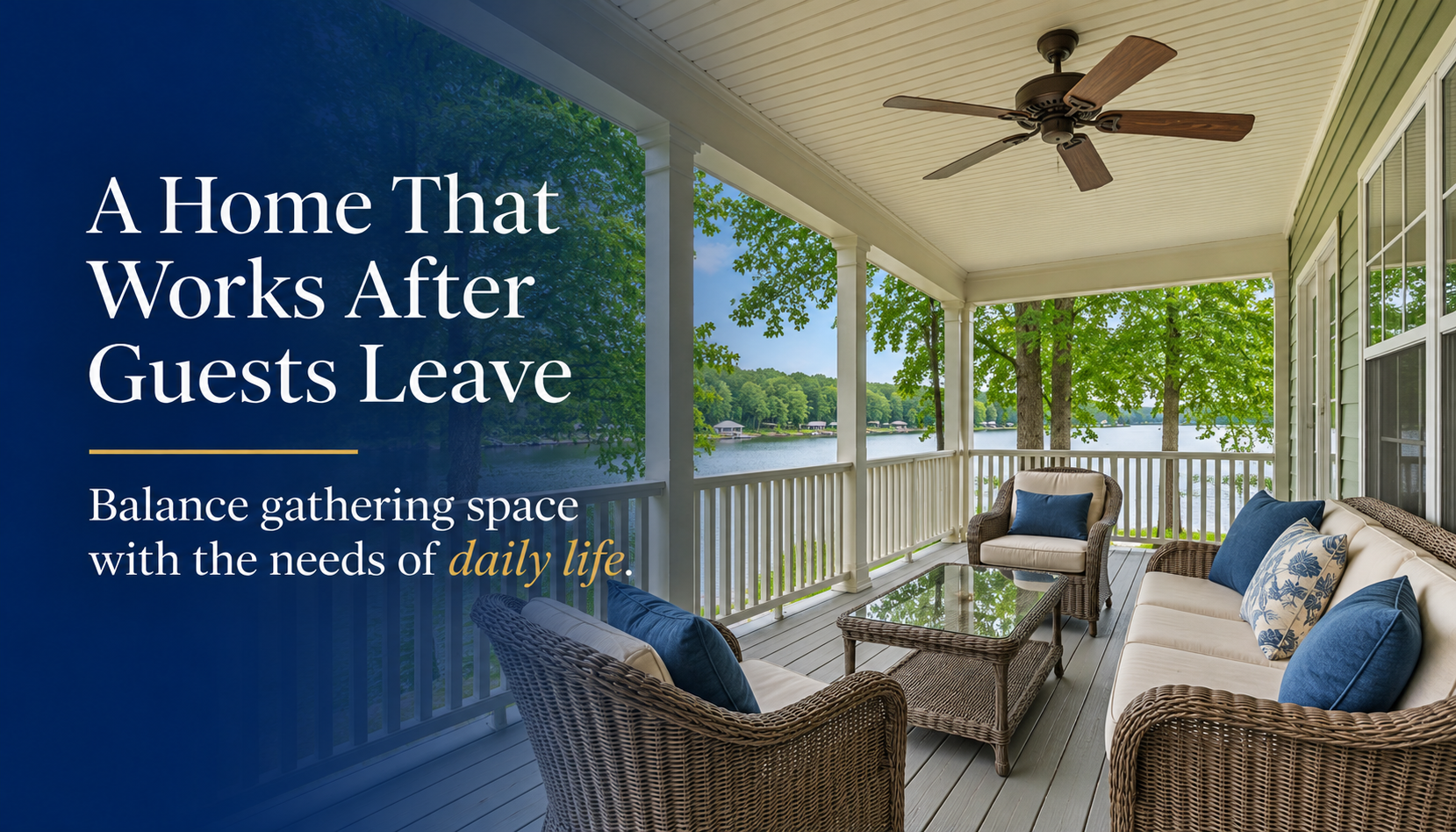
A home that works after the guests leave
A holiday gathering can help you notice how a home handles shared space, overnight visitors, and the rhythm of a busy day. Use that picture as one part of your search, then return to the questions that matter every week: Does the layout suit your household? Can a spare room serve more than one purpose? Does the location fit your routine? Does the monthly cost leave enough room for the rest of your plans?
There is no single “right” hosting layout for every buyer. Some households need a dedicated guest room, while others are better served by a flexible office, a second bathroom, or a comfortable place for everyone to gather. Buyers who are also preparing to sell a current home can review the team’s seller home search or request a home evaluation as a separate planning step.
When you tour Lake Norman homes, imagine the holiday table—but also the quiet morning after. The right fit should feel workable in both scenes.